


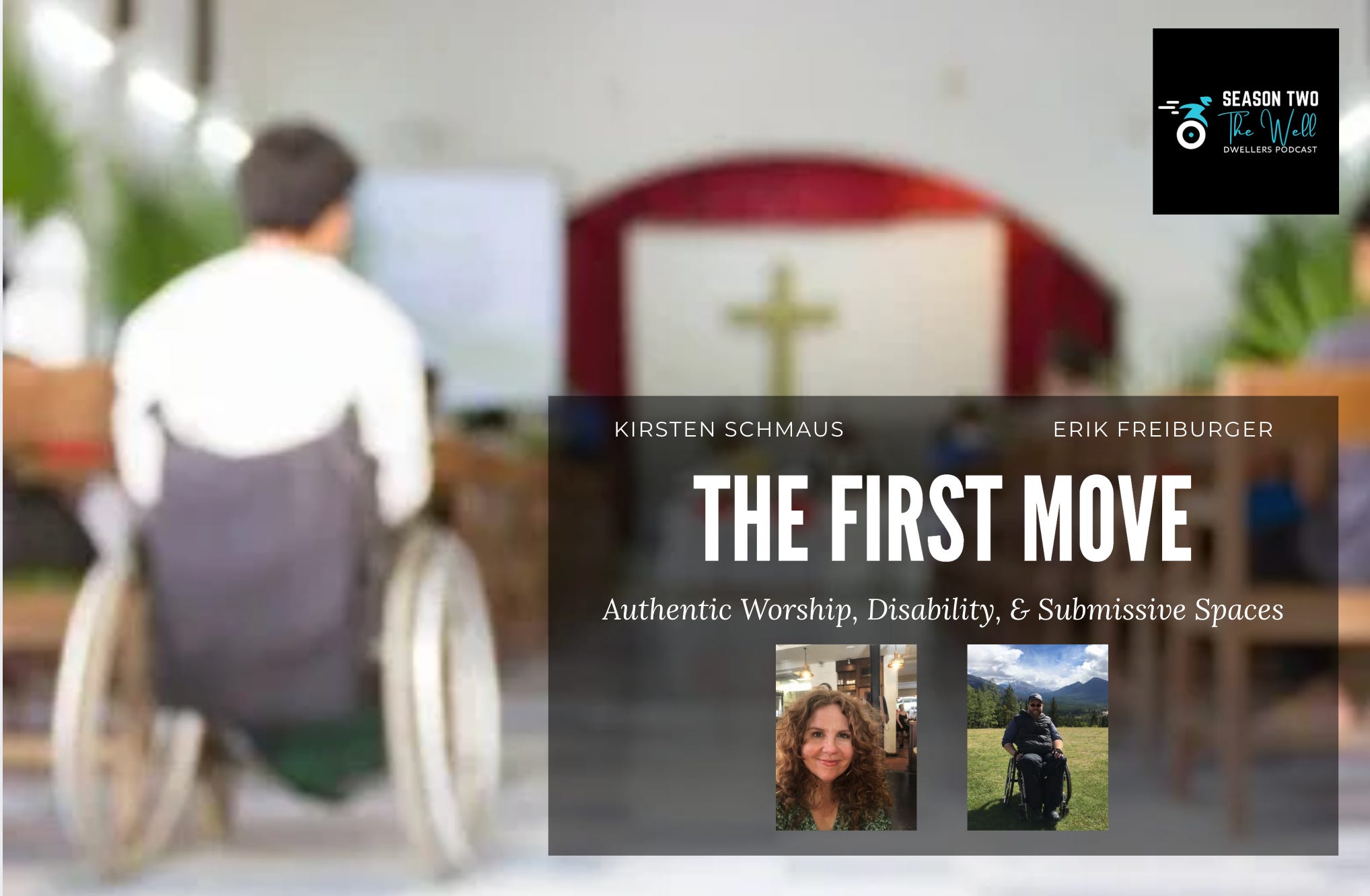
What if worship isn’t primarily about what we offer to God—but about what God is already doing within us?
In this deeply thoughtful and honest conversation, Erik Freiburger sits down with Kirsten Schmaus to explore how worship is shaped, disrupted, and reimagined through the lens of disability, embodiment, and community. Together, they invite us to move beyond performance-driven expressions and into something far more vulnerable, relational, and real.
As Erik frames early on, “it is not primarily about fixing worship, but about listening to what worship is already revealing—about God, about bodies, and about who belongs at the center of our shared life together.”
Kirsten brings years of experience in worship leadership and theological reflection, naming a critical shift many churches must wrestle with: “We run the risk of becoming the primary actor… and we forget that all worship is initiated by God, and that we respond.”
This reframing moves worship from performance to participation—from control to submission.
Together, Erik and Kirsten name how contemporary worship spaces can unintentionally mirror ableist assumptions—prioritizing polish, perfection, and predictability over presence, participation, and belonging. As Kirsten insightfully notes, practices like pre-recorded tracks can subtly communicate that “everything needs to move forward perfectly… and that is not welcoming, really.”
But this conversation is not merely critique—it is invitation.
An invitation to imagine worship spaces where bodies are not managed but received…
Where scars are not hidden but honored…
Where lament is not avoided but embraced as faithful worship.
In one of the most powerful moments of the episode, Kirsten reflects on leading worship the day after the tragic loss of her brother: “I don’t even know how to be in the world right now… but I do know how to worship.”
Here, worship becomes not triumph, but trust. Not escape, but presence.
This episode also explores:
The tension between expressive vs. formational worship
How ableism can shape liturgy, music, and leadership structures
The possibility of worship as justice enacted in real time
The beauty of communal, embodied practices like shared tables and Eucharist
And what it means to create “submissive spaces”—where we yield not to performance, but to the Spirit’s movement among us
At its heart, this conversation asks a provocative and necessary question:
What happens when disabled wisdom is not simply accommodated—but received as a gift?
Come listen in as we explore “the first move” of worship—not ours, but God’s—and what it might mean to follow that movement into deeper belonging, deeper honesty, and a more authentic life together.
Chapters:
00:47 Opening
03:30 A Fun Start
08:10 Worship Formation
15:39 An Ever Evolving Embodiment of Worship
20:29 Looking For Justice
28:21 When Breakthrough Doesn’t Happen
38:25 Restorative Justice At Work
48:01 Put Your Hands In My Scars
53:03 Banquet Of Belonging
57:46 Closing
Resources:
James k.A. Smith Books:
Rosemarie Garland-Thomson
‘Extrodinary Bodies’ — Here
Amos Young
‘The Bible, Disability, and the Church: A New Vision of the People of God’ — Here
Judith Butler
‘Bodies That Matter: On the Discursive Limits of Sex’ — Here
Nancy Eiesland
‘The Disabled God: Toward a Liberatory Theology of Disability’ — Here


