


“Not all those who wander are lost.”
— J.R.R. Tolkien
It is hard for me to know where to start. Everywhere I seem to look, it seems like so many battle lines of conflict are being drawn. As someone who has existed as a sort of nomad, I found a bit of comfort hiding in my prophetic cave in the wilderness while trying to pretend the earthquake that was happening under me and the firestorm out side the cavernous opening had little affect or impact on me. Try as I might, it seems more and more difficult to remain hidden in the shadows.
It wasn’t that I am without my own theological principles. More so, it was that my principles were able to be held in value without having to defend or enter the fray of the polarizing elements of world opinion. I am/was a nobody. And in some ways, I did not mind being so invisible.
Years ago I was confronted after presenting a proposal for a community ministry movement largely shaped by my missional theological values. It was shot down while questioning the potential “heresies” of such activities. I still remember sitting in a room where a denominational member of higher leadership turned to my pastor and said, “Yeah, we still are not sure what we are to do with these types of people.” It was my first taste of being accused directly of heretical deconstructional belief. Told I was seen as a “outside identity”, I moved on to growing a house church movement on my own. Ironically, as I told my pastor it would happen, Missional theology principles would be embraced by the denomination a few years later as the “next greatest thing”. By this time, I had long left the four walls of institutionalism. I don’t think I have signed a Doctrine of Membership Belief since.
Over the last few years, it seems this requirement of doctrinal submission or excommunication is rising once more. Academic theological exploration of doctrinal values are being challenged and repressed. Denominational institutions are siloing into defensive and exclusive positions. It is becoming more and more uncomfortable and discouraged to sit at the same communal table with those you may theologically be in difference of. Iron no longer sharpens iron. And wisdom is diluted by being comfortably numb as apposed to opening oneself to the punning of the Spirit and the submission to the unrecognized gardener. (John 20:14-16)
I am struggling heavily with the question:
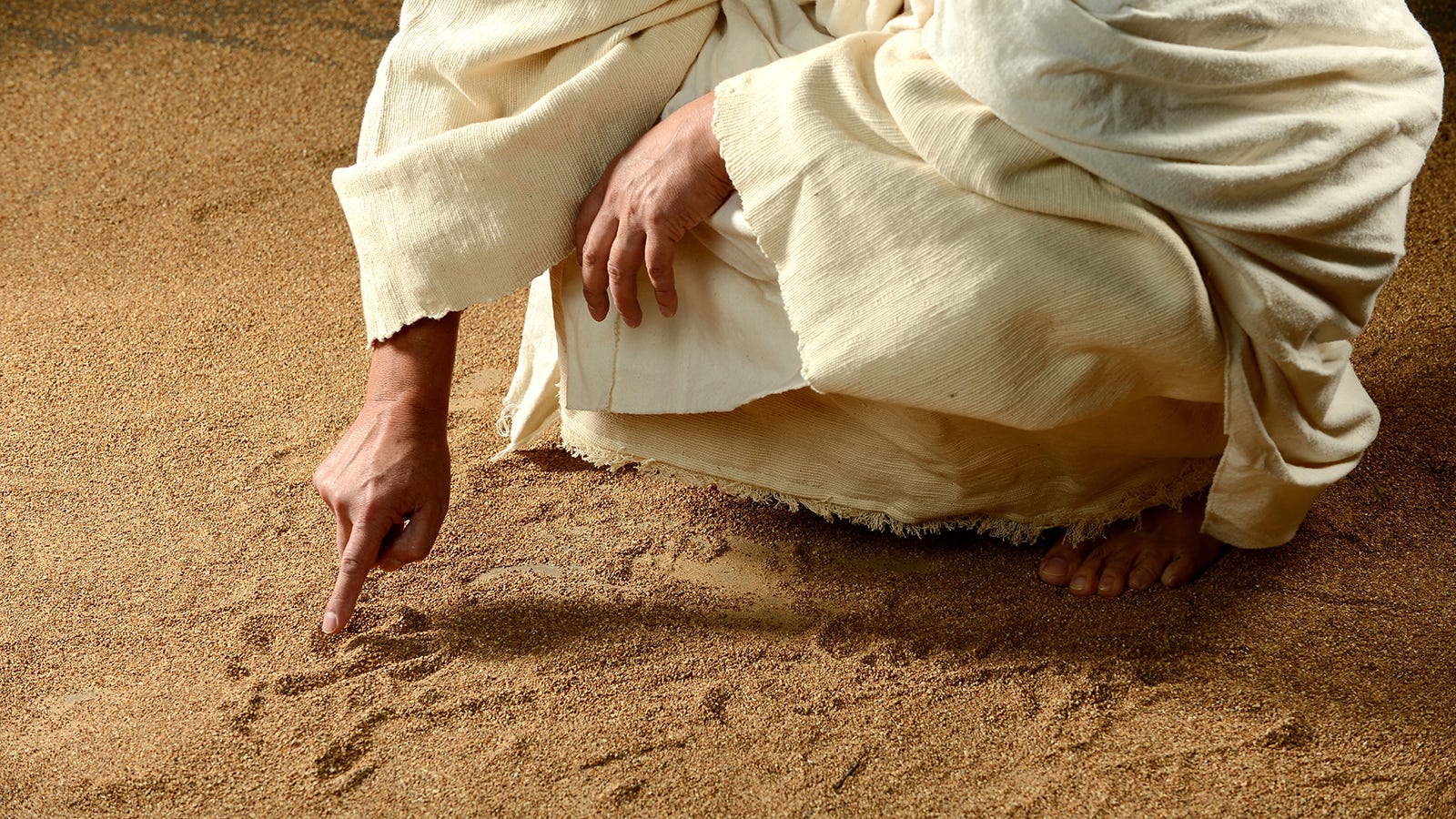
What am I to do when lines are being drawn in the sand?
The thought drew me back to the story of a woman (and man, for that matter) who were caught in adultery. The question of “Sin’s” involved I truly believe are probably far more complex then just the woman’s guilt or not. That is perhaps something to explore another time. Still, she was brought before Jesus with the question of, “What are we to do?”
Bending over, Jesus began to draw lines in the sand and told the religious leaders, “Let those who are without sin cast the first stone.” It wasn’t long before the accusers began to dissipate and disappear.
The truth is my theological positions in these arguments today are ones that draw me to the work and call of my heavenly Father. The intersections of such work keep me rooted in a firmament that provides both affirmation and fertilization that spurs growth and soulful challenge amidst doctrinal and principle differences. I do not agree with everything my marginalized relational connections believe. But nor do I feel the disempowerment of those differences uprooting the very powerful proximity we all share in with our creator. It is not my responsibility or place of authority to draw those lines in the sand. That is the place and authority for my Lord and Saviour’s hands.
Recently I came across the reference to Scot McKnight’s latest publication ‘Traumatized Church’. He writes with the effort in pairing theological insights with counseling expertise to guide readers through the four R's of trauma care: Realize, Recognize, Respond, and Resist.
As the Disability movement in the living church looks towards the future of its initiatives both in identity and in intersectionality, I find myself wondering how these four R’s might shape the disability theology and spirituality of its members. If nothing else, those of us in the disabled life should be masters of navigating trauma. Perhaps the future of the greater Church might depend on us for this!