


“To be truly visionary we have to root our embodied actions into our concrete reality while simultaneously imagining possibilities beyond that reality.”
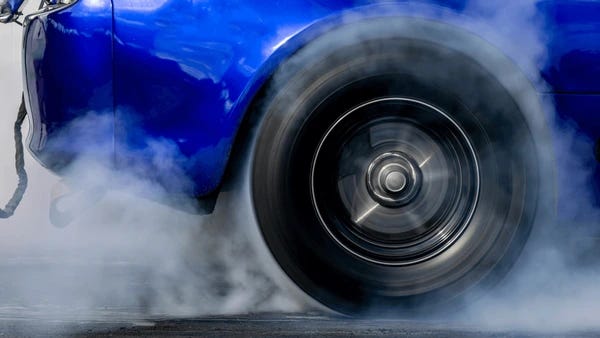
One of my favorite moments in the holidays is being able to cozy up with my wife Bonnie in our home theatre and watch a fantastic movie. Just a few nights ago, we dimmed the lights and together watched Brad Pitt’s newest film ‘F1’ — an incredible thrill ride of adrenaline and dramatic dialogue! While watching, a particular scene grabbed my imagination as the APXGP team members sat around the conference table and spoke ardently about holding onto their best hopes for the coming day’s race. Their driver Sonny Hayes however, cynically interrupted them saying, “Hope is not a strategy.”
What was it that seemed to grab my imagination’s attention in this moment?
“Hope Is Not a Strategy” — Naming the Limit Without Abandoning Hope
Over the past year, I have spent a lot of my energy and focus wondering where the disabled community and myself might find hope and experience it in deeper more profound ways. It has provided many moments of community development and activity, encounters with others in the search, conversations and presentations that led to personal and social growth, and time spent reading, listening, and learning from incredibly articulate and smarter people then I!
I owe a great debt to authors like Fern E.M. Buszowski 🇨🇦 , Sara Hagerty, Kurt Willems, Amy Lively, Kate Bowler, Richard Rohr, Christine Caine, and countless bloggers and social personality’s. There is profound gratitude to my friends Ty Ragan, Psy.D., Alan Hirsch, Rob Buschman, my community in the New Leaf Network, and my home church The First Alliance here in Calgary. They have all greatly inspired my journey of hope this past year and what it might look like in disability.
But, Sonny Hayes is right. And in the paraphrased words of Jürgen Moltmann:
“Hope alone is not enough. It does not change the present. But without hope, the present cannot be endured.”
In a life of disability, Hope is not a strategy—it is a revealing vision of divine light that is shaping our imaginations, a refusal to accept social injustice as inevitable, and the courage to act toward a future not yet visible. Somewhere in a deeper story written in our life’s journey we must come to the transcending belief that Hope imagines the road ahead; while joy is the strategy that keeps us driving.
When Hope Seems Blurry: Joy as an Enduring Practice
Recently, I have started reading ‘The Book of Joy’ by His Holiness the Dalai Lama & the Archbishop Desmond Tutu. Hoping it might begin to steer me in a direction of what a strategy and practice of disabled spirituality might look like, it quickly revealed a foundation to how that conversation might be grounded in reality. Speaking plainly, the Dalai Lama & Tutu framed their approach:
“Suffering is inevitable. But how we respond to that suffering is our choice. Not even oppression or occupation can take away this freedom to choose our response.”
— Lama, Dalai; Tutu, Desmond; Abrams, Douglas Carlton. The Book of Joy: Lasting Happiness in a Changing World (p. 7). (Function). Kindle Edition.
I have never professed that the disabled life is easy. Everyday comes with its ups & downs and many times it is not an easy or fair split between the two. But I don’t think in the 30 years I’ve been in a wheelchair that I have ever seen myself as suffering. Certainly there have been more then my fair share of experiences and times of pain. But I guess I simply framed it as the constant fight for life we all face in some form or way. Like the Furyan striving forward defiantly into the face of death itself, pain is a right of passage and not a state of suffering. But, with maybe a little more joy?

I think Jesus’s brother, the apostle James, also had a streak of Furyan character. “My brothers and sisters,” He began his letter to the early Christians who were facing great oppression and socially imposed exclusions to the point of death:
“… whenever you face trials of any kind, consider it nothing but joy, because you know that the testing of your faith produces endurance; and let endurance have its full effect, so that you may be mature and complete, lacking in nothing.” (James 1:2-4)
James has a great point. Joy can hardly cover the full strategy and practice of a enduring & maturing disabled spirituality. But it is a conceiving start to a foundation that can build upon such a deep and meaningful endeavour. That foundation of joy is the task I am pulled towards as this New Year dawns.
“Drive Fast” — Joy as Strategy, Motion, and Refusal to Stagnate
There was an awkward pause following Sonny’s interruption in the APXGP pre-race meeting before the question was then asked, “So what is your strategy?” Sonny’s answer was simple, “Drive fast.”
Simple. Plain. And Direct. I don’t think Sonny thought driving a Formula 1 race car was easy and without the complexities of planning, conditioning, deconstructing & rebuilding. And of course practicing to win a race. The same truth can be said in building a strategy for practicing an enduring, maturing, and joyful disabled spirituality.
Hope casts an awe infused vision for us in an ever drawing near eternal reality. But, hope is not a strategy for driving the disabled life we live for and desire today. It cannot, by itself, carry us through exhaustion, repetition, or grief. Hope imagines what might yet be possible, but imagination alone does not move the body, mind, or spirit alone. And so Paul does not say, “Hope always.” He says, “Rejoice always. Again, I say rejoice!”
Joy becomes the practice that keeps us moving when hope feels thin. Joy does not deny struggle; it refuses to let struggle have the final word. “Drive fast,” not as escape or recklessness, but as commitment—to stay in motion, to remain alive to wonder, to move through the world with a defiant gladness rooted deeper than outcomes or ends.
So let the journey and race towards discovering a practical disabled spirituality built upon a foundation of joy begin!
“Do you not know that in a race the runners all compete, but only one receives the prize? Run in such a way that you may win it. Athletes exercise self-control in all things; they do it to receive a perishable wreath, but we an imperishable one. So I do not run aimlessly, nor do I box as though beating the air; but I punish my body and enslave it, so that after proclaiming to others I myself should not be disqualified
— The Holy Bible: New Revised Standard Version (1 Co 9:24–27). (1989). Thomas Nelson Publishers.


