
There is a kind of justice that can be discussed endlessly in committee meetings, debated in political arenas, and analyzed in theological classrooms. It can be measured, quantified, legislated, and systematized. Yet there is another kind of justice—one that cannot be understood from a distance because it must first be encountered in a person.
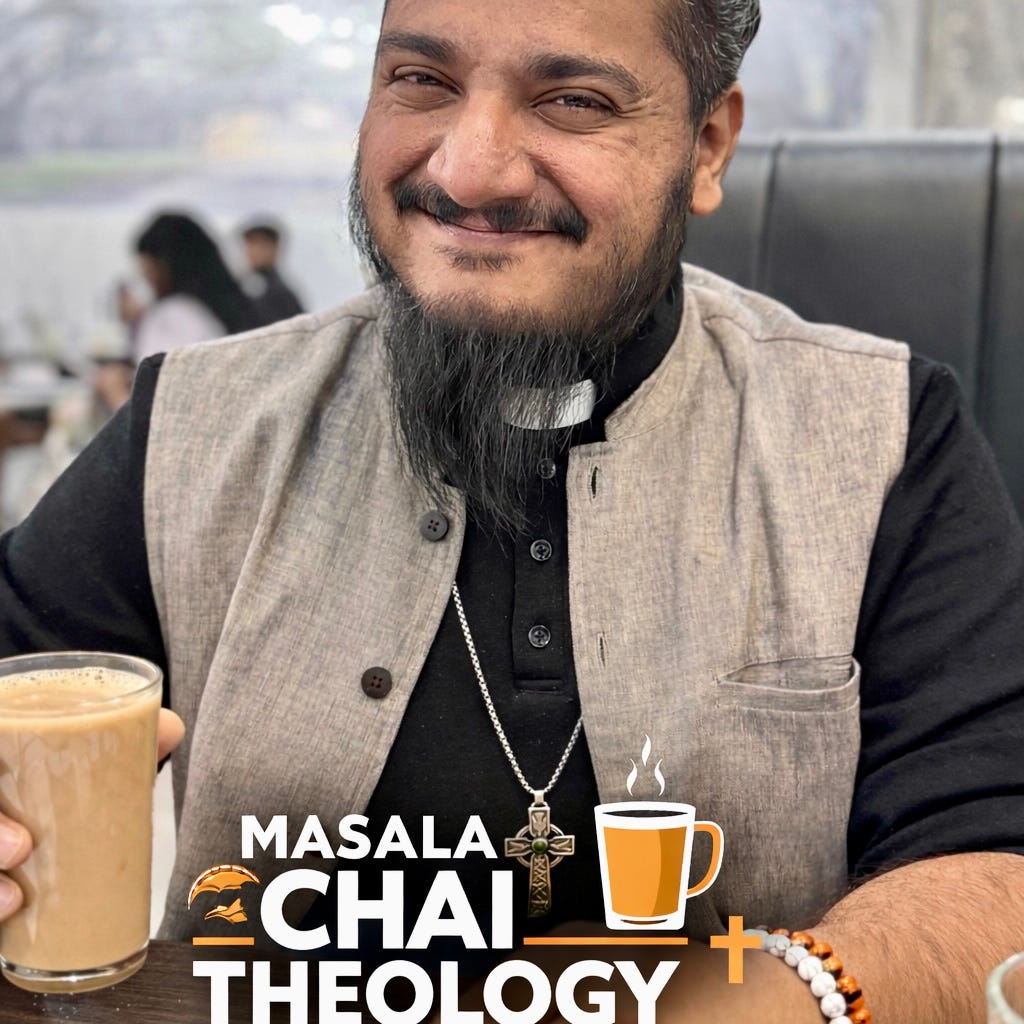
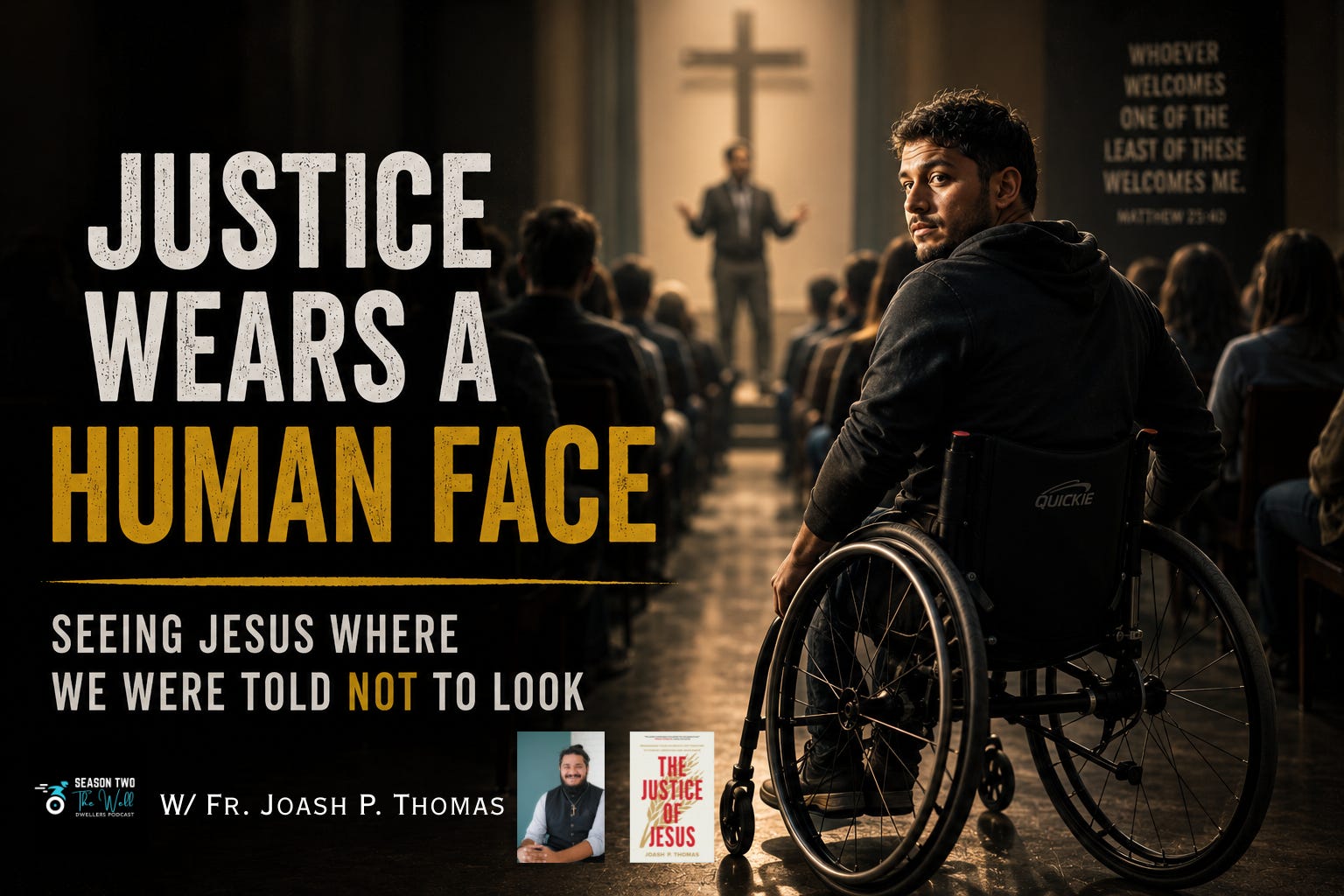
In this episode of The Well Dwellers Podcast, I sit down with Fr. Joash P. Thomas to discuss his book ‘The Justice of Jesus’. What unfolds is not merely a conversation about social ethics or church activism. It is a deeper exploration of what happens when justice is rooted not in ideology, but in the person of Christ.
As Joash writes:
“My hope is that on completing this book, you’ll walk away with practices and ideas to help your faith community prioritize justice work that flows from your hope in Jesus.”
That distinction matters.
Too often, justice becomes detached from discipleship. It becomes another project, another program, another cause to support. But Joash reminds us that Christian justice begins with proximity. It begins by learning to see Christ where society least expects Him to be found.
As he says during our conversation:
“Justice is at its core deeply relational. Just like the gospel. It’s deeply communal and deeply relational.”
Together we wrestle with questions that sit close to the heart of this podcast:
What happens when the church views disabled people primarily as problems to be solved rather than teachers to be heard?
What if accessibility is not first a policy issue but a relationship issue?
What if healing is not the only lens through which we understand the work of Jesus?
And what if the margins are not simply places where ministry happens, but places where Jesus is already present, waiting for the church to arrive?
One of the most powerful moments in our conversation comes when Joash reflects on Christ’s encounters with disabled people throughout the Gospels:
“Every time he walks up to someone who’s disabled, Jesus almost always asks, ‘Do you want to be healed?’ He’s acknowledging that agency when society often takes it away.”
That observation opens a larger question. How often has the church spoken about disabled people without listening to disabled people? How often have we assumed what flourishing should look like for others rather than learning from their experience?
Throughout our conversation, we explore how disabled communities challenge the church’s addiction to certainty, productivity, and hierarchy. We reflect on the ways vulnerability can become a site of revelation rather than deficiency. We discuss why justice requires more than compassion—it requires solidarity.
Joash offers a vision of the church that echoes the heart of the Gospel itself:
“We need each other’s eyes to see Jesus.”
Those words linger.
Because perhaps the greatest barrier facing the church is not a lack of theology, resources, or programs. Perhaps it is a failure of imagination. A failure to believe that Christ might be speaking through voices we have not yet learned to hear.
As we conclude the conversation, I offer this reflection:
“Justice is not a slogan.
It is not a policy document.
It is not a performance of virtue.
Justice is a body—a wounded body,
a disabled body,
a crucified body,
a resurrected body.
And the church is called not to admire it,
but to become it.”
My hope is that this conversation does more than inform. I hope it unsettles us. I hope it invites us deeper. And I hope it helps us cultivate the eyes to see Jesus where He has always been—among those the world has overlooked.
Arm in arm, may we continue to seek justice and find it in the margins where we are told not to look.
Chapters:
00:26 Meeting Joash Thomas
06:05 Justice As A System; Justice As A Person
13:35 A Church’s Posture To The Marginalized
24:39 Cultivating Eyes To See Jesus
44:20 Take Up Your Cross… Arm In Arm
46:52 Would You Do Anything Differently?
49:26 Closing Words
Resources: